Picture a person riding a bicycle with square wheels.
Someone chases after them with round wheels, shouting “Stop! I can help!” But the rider pedals harder, sweating profusely, calling back “Leave me alone! I’m too busy!”
This is every organisation trying to fix mental health with digital tools such as meditation-mindfulness apps, and AI chatbots.
I’ve spent decades studying how ancient martial arts can solve modern mental health crises. What I’ve discovered will change how we think about therapy, corporate wellness, and human connection by 2026 – if not sooner than that!
The Ancient Secret We Forgot
Ancient martial arts started as healing, not fighting.
Monks followed a precise progression. First, they mastered spiritual healing and became spiritual doctors. Second, they mastered mental healing and became mental doctors. Third, they mastered physical healing and became physical doctors.
Combat training came fourth and last.
The “art” part meant construction and healing. The “martial” part meant destruction and hurting. Two sides of the same coin, inseparable. They needed the combatives to protect their temples and their clans from external existential threats.
Shaolin warrior monks understood something we’ve forgotten. Mental wellness requires the same discipline, training, and mastery as physical disciplines.
We’ve lost that way. My mission is bringing it back.
Why Digital Tools Miss the Point
Mental health apps and AI tools won’t help people.
What people need is the human element with a personalised touch from bona-fide martial arts masters with deep expertise in the corporate environment. Face-to-face guidance. Coaching that includes movement-based learning – a somatic therapy.
Organisations are starting to realise martial arts brings something digital never can. A wealth of ancient wisdom and experience that adds tremendous real-life value, not just theoretic value.
Recent research proves this instinct right. Martial arts training shows significant positive effects on wellbeing and mental health. It works as an efficacious intervention for reducing depression and anxiety.
But here’s what makes it revolutionary.
Mental Martial Arts: Moving Meditation for Modern Life
Martial arts is meditation in motion.
Whether you’re practicing alone, in a dojo, or unfortunately forced into real combat, a seasoned practitioner stays in true zen. Chaos ensues around them, but inwardly they remain completely still.
They exist in the eye of the storm where everything is calm and clear, so they can observe what is going on, orientate themselves within the chaos with calmness and clarity, take decisive action, and respond intelligently with grace, wisdom and confidence – rather than with an animalistic primal reactivity.
This is what I call Martial Mind Power. It incorporates four unique pedagogical modalities:
Kinaesthetic learning through tactile and physical activity. Interoception developing self-awareness through internal body signals. Proprioception fostering control of body, space, and equilibrium. Neuromotor development harmonising movement, emotion, and recoding thought processes.
When you incorporate movement-based learning with engaging activity, it doesn’t feel like learning. It feels like play.
The teachings embed into your unconscious mind. They reprogram your thought processes on a subconscious level through perfect practice over time.
Positive self-talk research shows how this works neurologically. It improves cognitive performance through altered brain connectivity, modulating motivation-related regions. As Deepak Chopra said, “Every cell in your body is eavesdropping on your thoughts,” so be careful what you say to yourself.
The 2026 Corporate Crisis
Psychological safety is about to explode in the corporate environment.
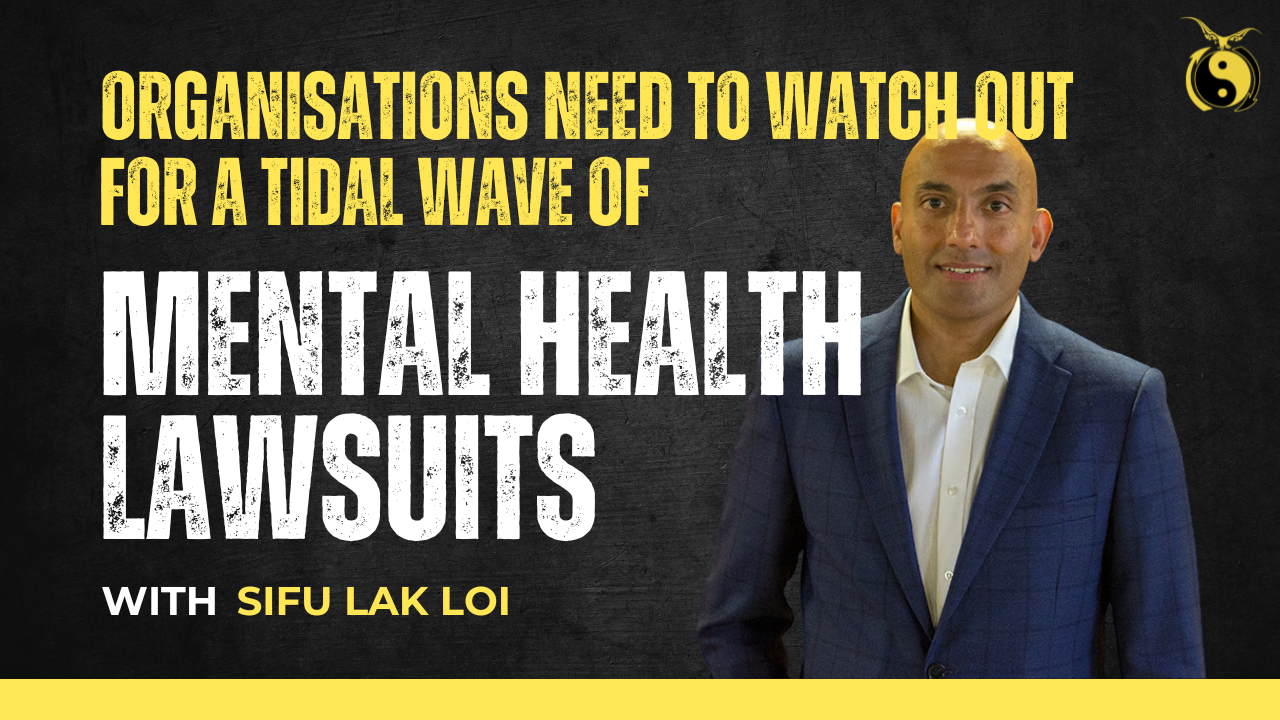
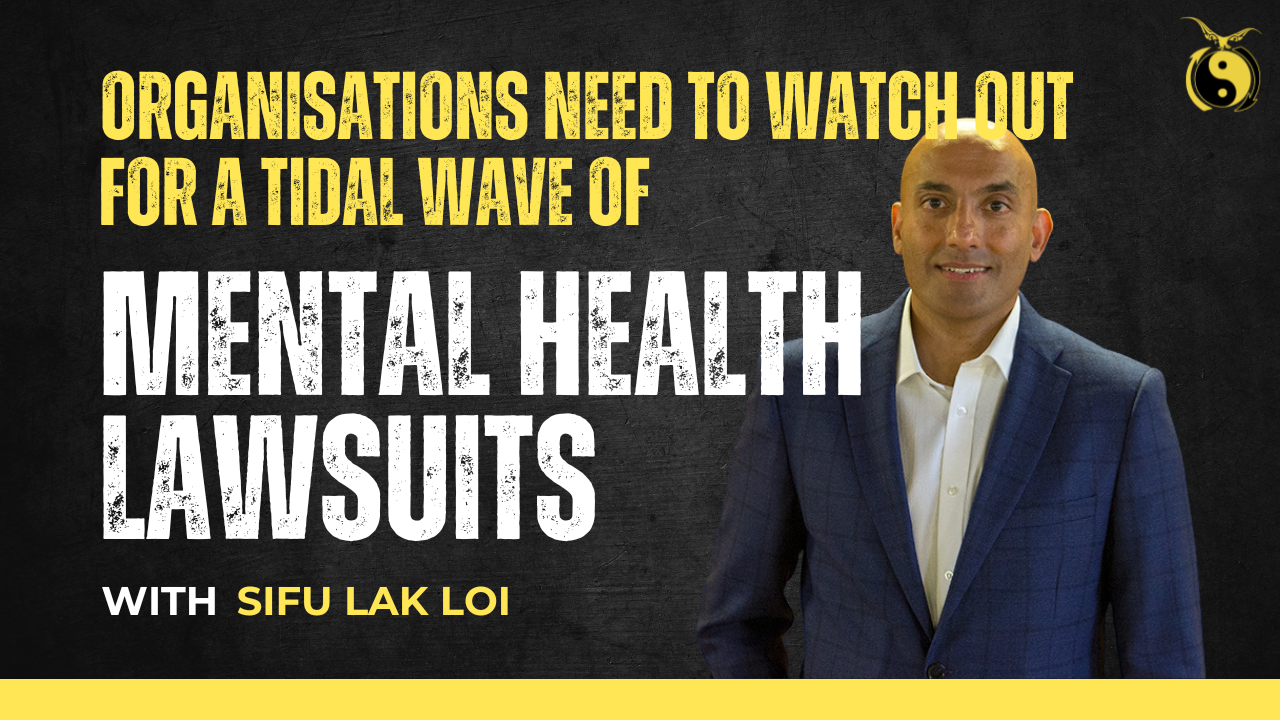
Organisations are playing with fire – recklessly pushing people beyond their limits in pursuit of results, causing physical dis-ease and mental breakdowns, forcing people to go on sick and/or stress leave, fabricating unfair and constructive dismissal cases to get rid of the problem. All it is going to take is one big public law suit to break the dam, then watch the tidal wave of law suits engulf corporations as others follow suit.
Corporations will need to fulfil legal psychological safety obligations, ensuring people are safe psychologically, not just physically to truly protect themselves.
This creates massive demand for new types of consultancy. Five years ago, mental health wasn’t a corporate issue. Now it dominates boardroom discussions and is rapidly rising. We are at a critical mass!
But here’s the problem. Organisations are fragmenting their teams, treating people as separate individuals. There’s no community.
Building Warrior Tribes
Community is a combination of communication and unity.
Ancient martial arts was taught within families so clan members could protect one another with their secret martial techniques.
To join a family, even if you were not born into it, you earned your rite of passage. You earned trust, rapport, and connection through: hard work, honour, sincerity, integrity, respect, politeness, justice, courage, mercy, loyalty, sound character, and self-control. The clan leader, who held the ancient wisdom, would initiate and lead you.
Then clan members looked out for each other.
If organisations adopt a clan-based martial family attitude, colleagues stop seeing each other as separate – a competitor, the opposition, a threat! They become part of each other.
You’ll do anything to protect your family, because its’ deeper than a bunch of people that happen to work on something together, especially when you spend two-thirds of your working life with these people – we can make it more meaningful.
Some coaches say your organisation isn’t your family. True. But it is a team, a community, a clan, a tribe – a collective that need to learn how to work as one if they are to prosper together. So let’s try and close the gap with a gain.
This changes everything about how you operate. How you handle conflicts. How you seek win-win outcomes. How you transcend problems and apply ancient wisdom across personal and professional life. Conflicts are good when done honourably like sparring in a dojo, because they create a healthy dialogue that challenges the status quo, so you can break-down limiting beliefs, push your boundaries, and grow.
It’s a new way of thinking. It’s a game-changer!
The Implementation Reality
The biggest obstacle to implementing anything is the illusion of being too busy.
Organisations need to take time out, breathe, relax, observe, orientate, decide and act through absolute clarity and honesty with the status quo. If you’re in denial, then “Forget about it!“ Nothing is going to help and good luck.
They need to make time to rebuild communities within the organisation. Rebuild team dynamics between individuals, teams, departments, companies, and groups.
Break down barriers. Break down hostilities. Break down animosity.
Create transparency, honesty, and level playing fields where everyone focuses on mutual well-formed outcomes, sharing the same vision, mission and purpose, and the tasks they need to do to get there, instead of interpersonal issues and in-fighting.
We’re already sharing Martial Mind Power self-mastery teachings through group classes, private tuition, self-defence and self-mastery experiences, one-on-one coaching for execs, creatives and change-makers, our online academy and dojo, corporate wellbeing courses, conscious leadership training, talks and podcasts, and our library of books. The results speak for themselves. When people prosper holistically as individuals, only then can organisations prosper collectively. As they say, “You have to know yourself to know others.”
Why This Matters Now
Martial arts addresses the body, mind, emotion, and spirit in totality.
It’s complementary to other healing modalities. We integrate and collaborate with dance, yoga, music, mindfulness, meditation, nutrition, and wider therapeutic methodologies to offer the most holistic approach.
When you look at martial arts, you think strength, resilience, fortitude, and fighting spirit. These fundamental pillars become what practitioners embody and reflect.
Organisations will increasingly look toward developing martial mindsets, emotional resilience, trustworthiness and performance by cultivating individuals’ self-mastery so they are truly aligned physically, mentally, emotionally, spiritually, to create a culture infused with rich virtues and values which become ritualistic practices within your organisation.
This foundation has been carried down through generations. It will continue perpetuating as long as possible because the wisdom works and has helped preserve and perpetuate entire national cultures – which organisations can learn and embody.
By 2026, Mental Martial Arts won’t replace traditional therapy. It will transform how we think about mental health from band-aid solutions to fixing the root cause of the problems, creating positive transformational change in culture and prosperity, helping organisations go from strength-to-strength – from individual suffering to warrior tribes protecting each other.
The bicycle with square wheels keeps bouncing along. But the round wheels are coming.
Make time to transform and transcend.
Peace, respect and love, Sifu Lak Loi