
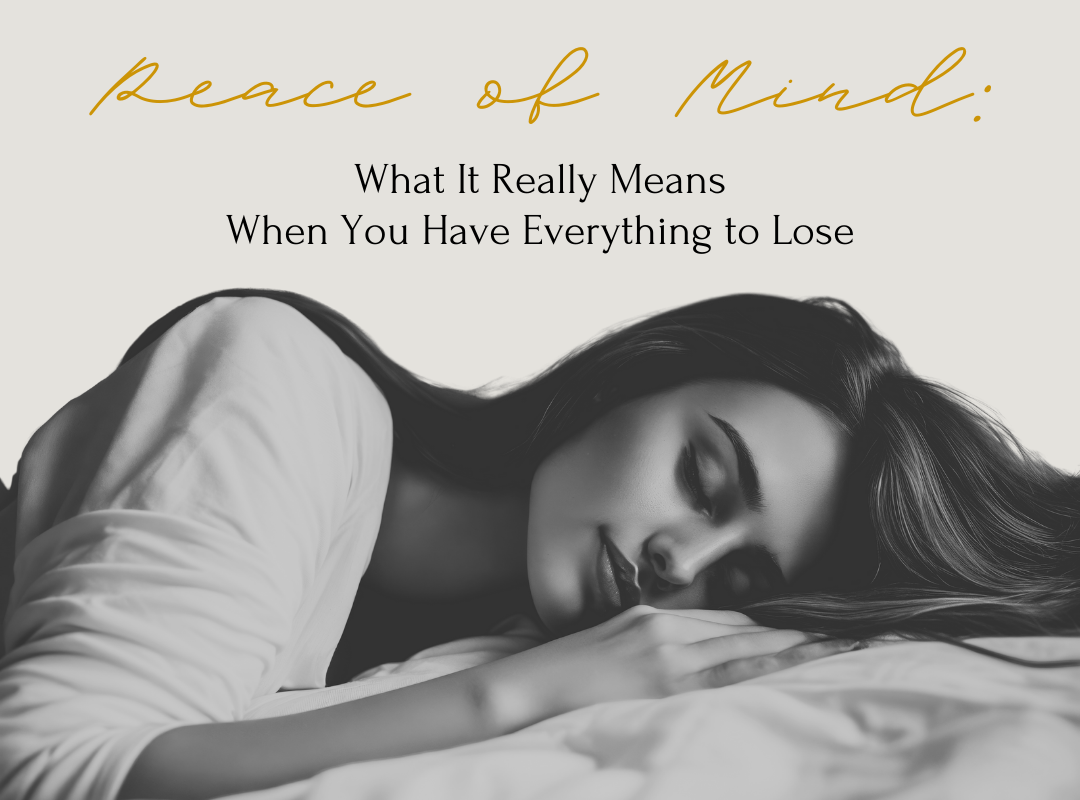
Memoir’s of an ulta-high-net-worth individual (anonymous)
For most of my life, I believed peace of mind came from structure. From private security teams. From close camera surveillance systems. From layers of protection quietly working in the background while I focused on building, leading, and providing. And to a degree, that belief served me well. I surrounded myself with the right people. I invested in the right infrastructure. I followed the right advice. On paper, I was secure. But there was a truth I didn’t articulate—one I didn’t even fully acknowledge until much later.
My peace of mind was borrowed.
It depended on others being present. On response times holding. On circumstances unfolding as planned. And life, as I eventually learned, does not always respect plans.
The Quiet Weight No One Talks About
When you live with visibility, responsibility, and success, there is a low-level vigilance that never fully switches off. It’s not fear in the dramatic sense. It’s subtler than that. You notice exits without meaning to. You register movement in your peripheral vision. You calculate distances unconsciously. You don’t panic—but you’re never fully at rest. What unsettled me wasn’t the idea of danger itself. It was the unspoken question underneath it:
“What happens if something goes wrong when no one else is there?”
That question has a way of resurfacing at night.
The Moment That Changed My Thinking
Nothing catastrophic happened. No attack. No headline. Just a moment—brief, unremarkable to anyone else—when I realised how quickly normality can dissolve. A door closing too fast. A situation escalating unexpectedly. A sudden sense that control had shifted. In that moment, I felt something unfamiliar. Not panic.
Uncertainty.
And uncertainty, I discovered, is more unsettling than fear. Because fear reacts. Uncertainty freezes. I realised then that if something truly serious occurred—if systems failed, if timing was wrong, if help was delayed, if someone breached my private security defence lines—my wealth would not step forward in my place.
I would.
Or I wouldn’t. And that distinction mattered.
Understanding the Real Gap
Private security teams are exceptional at what they do. Technology is indispensable. Plans and protocols are essential. But none of them eliminate the final gap. The gap between:
- Awareness and action
- Shock and decision
- Outsourcing and ownership.
That gap is measured in seconds—and filled by the individual. Until that point, I had assumed that preparedness was something I could delegate. I was wrong.
Learning What Calm Actually Is
What surprised me most about training was not the physical element. It was psychological. I learned what stress actually feels like—and how not to fight it. I learned that clarity is trained, not hoped for. I learned that panic is not inevitable. Most importantly, I learned that…
Calm is a skill.
Once you experience yourself remaining composed under pressure—really composed, not pretending—you stop fearing your own reaction. That alone changes everything.
The Shift I Didn’t Expect
Something subtle but profound happened over time. I stopped scanning rooms anxiously. I stopped rehearsing worst-case scenarios. I stopped feeling unsettled when routines changed. Not because the world became safer. But because…
I became steadier within it.
Peace of mind stopped being external. It became internal. Portable. Reliable.
What Peace of Mind Means Now
Today, peace of mind looks different. It means knowing that if someone demands a possession, I can let it go instantly—without hesitation or attachment. Because things are replaceable. People are not.
It means knowing that if my children look to me in an uncertain moment, they will see calm—not fear. It means sleeping without the low-grade tension I once mistook for normal. It means understanding that while I still value teams and systems,
I am no longer psychologically dependent on them.
That is sovereignty.
The Unspoken Relief
There is a quiet relief that comes from knowing you have addressed the final responsibility. Not aggressively. Not obsessively. But consciously. You stop wondering:
- “What if I freeze?”
- “What if I fail?”
- “What if I can’t cope?”
Because you’ve already answered those questions—through experience, not theory.
A Different Relationship With Risk
Risk doesn’t disappear. But it stops dominating. You no longer carry unresolved fear from past stories, near misses, or imagined futures. You’ve integrated the reality of uncertainty—rather than denying it. And that brings a surprising sense of freedom.
What I Wish I’d Known Earlier
I used to think peace of mind was the reward of success. I now know it is the result of…
Capability.
Real peace of mind doesn’t come from pretending nothing will happen. It comes from knowing that if something does, you will not be helpless. That knowledge changes how you walk, speak, lead, and live. It is not loud. It is not visible. But it is unmistakable.
Final Reflection
If you carry responsibility—for a family, a legacy, or others who depend on you—there comes a point where outsourcing safety is no longer enough. Not because you distrust others. But because…
Some responsibilities are personal by nature.
For me, peace of mind finally arrived when I stopped asking who would protect me…
…and started ensuring that I could protect what matters most. Quietly. Responsibly. With calm, clarity, and control.
That is not fear. That is freedom!